Arable Growers Guide 2025-26
Margins | Inputs
Variety Performance | Real-World Data
Get Access
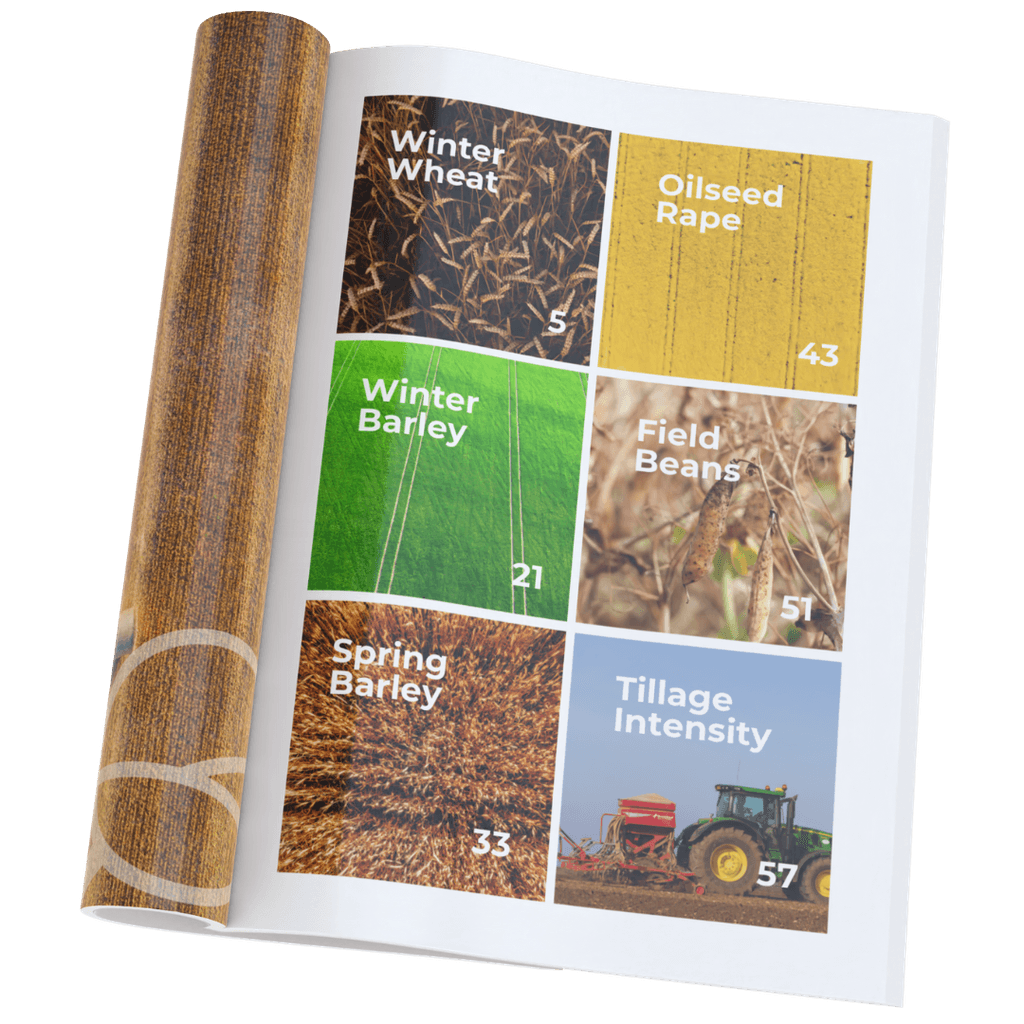
WHAT’S INSIDE THE GUIDE?
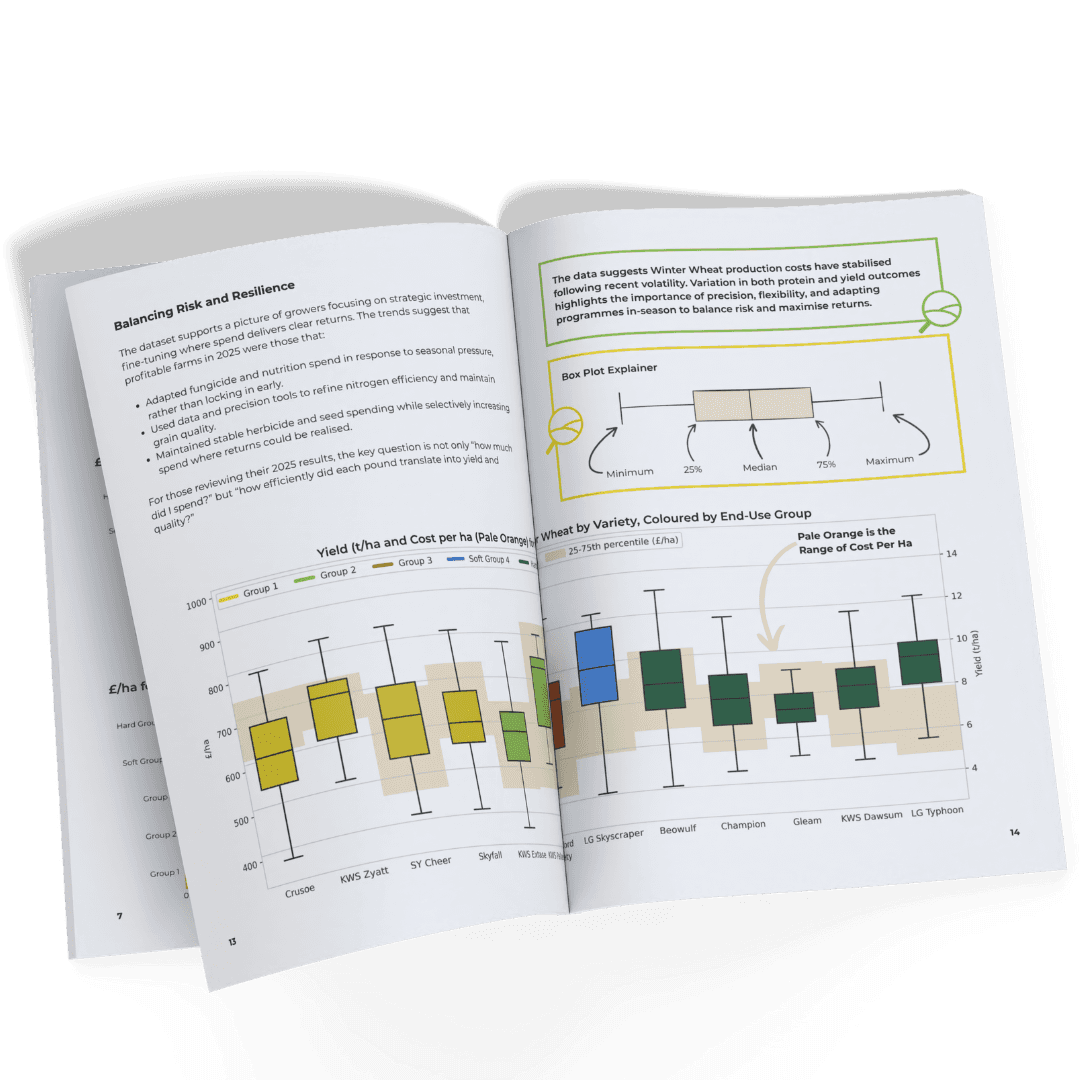
Varietal Performance in the Real World
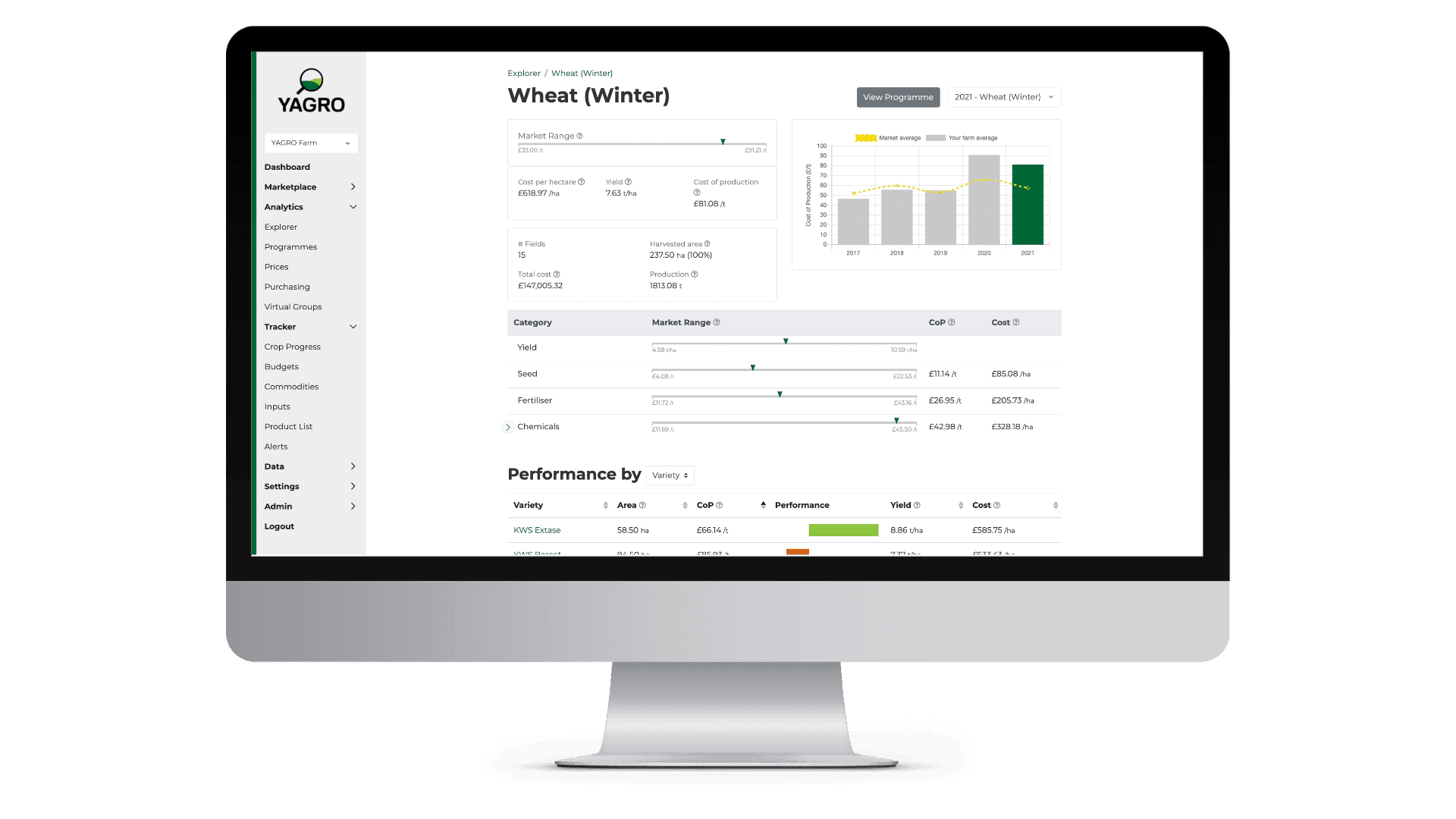
How leading varieties actually performed on farm in 2025, including yield ranges and £/t cost of production, to inform variety choice for future seasons.
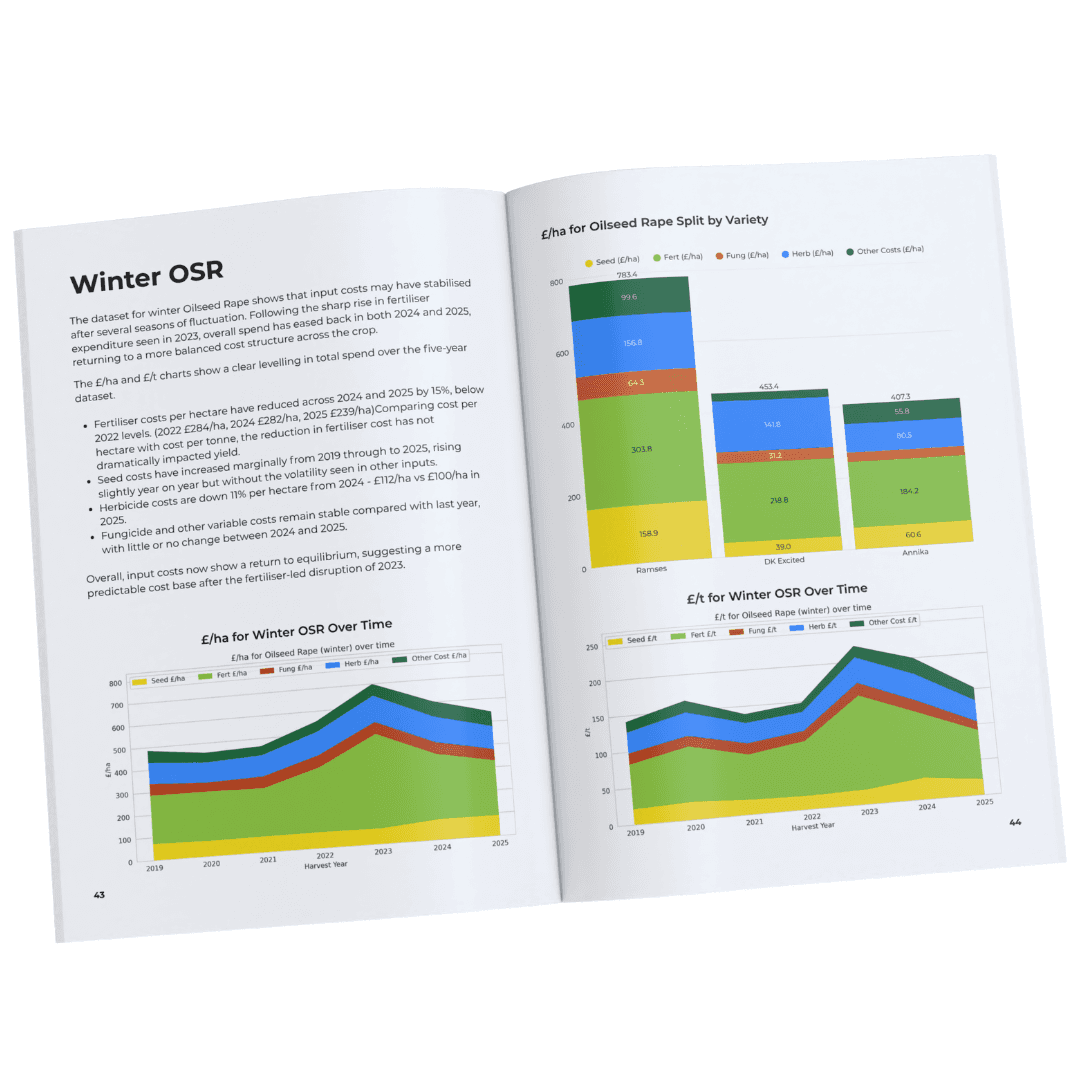
Input Trends You Can Plan Around
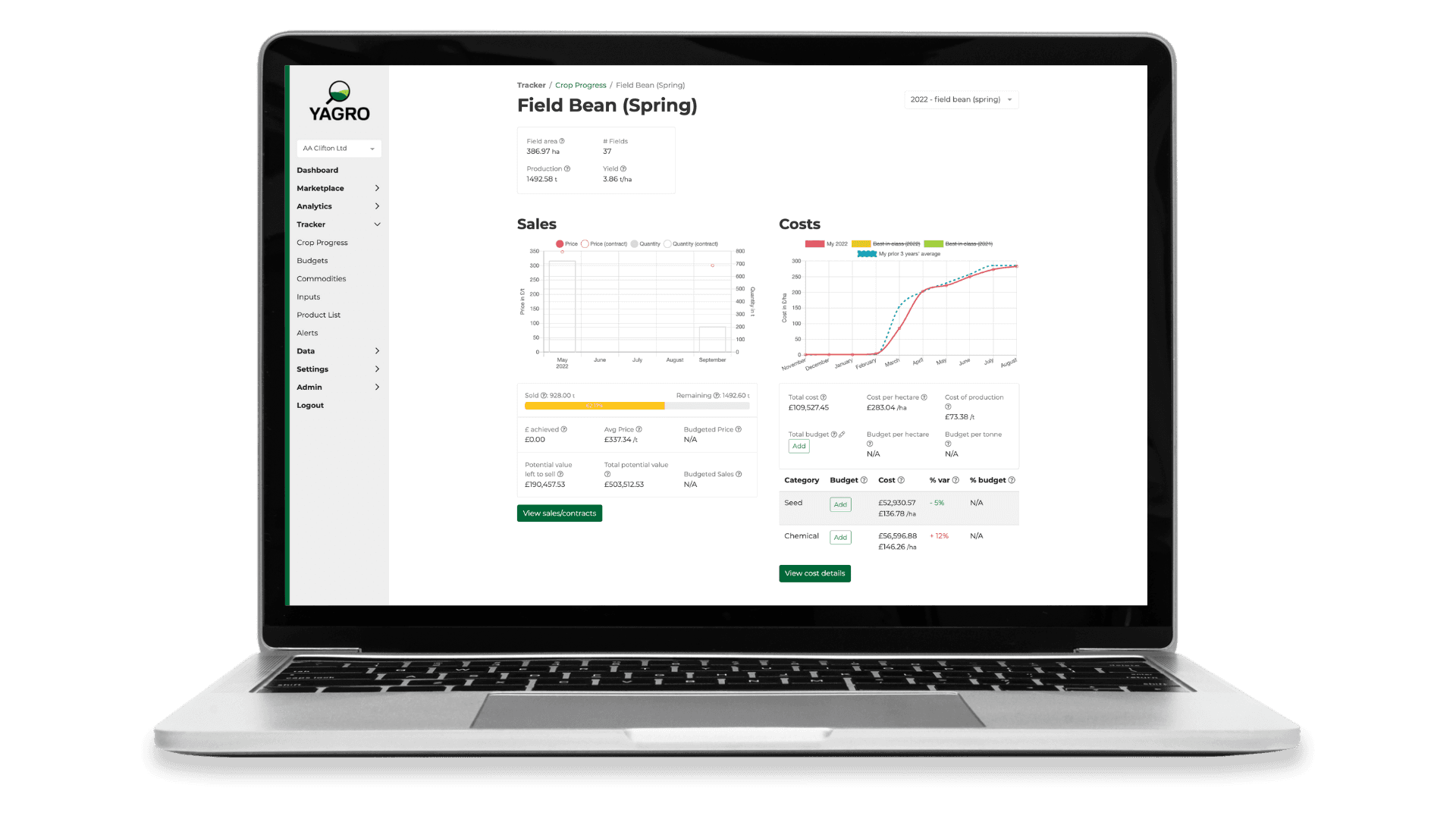
Clear five-year trends in fertiliser, fungicide, herbicide and seed spend, plus how nitrogen sources (liquid, AN, urea, organic, etc.) are shifting across crops.
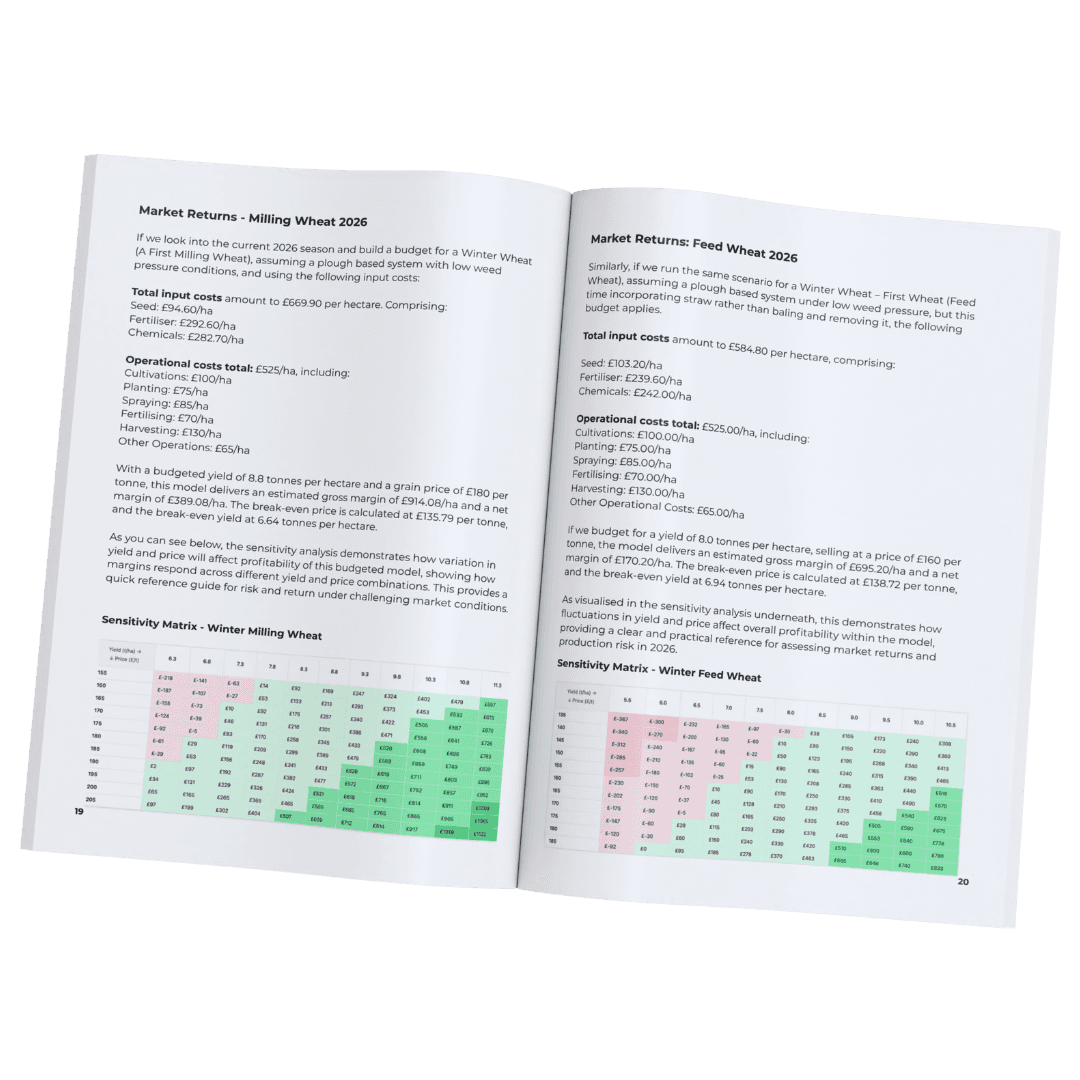
Worked 2026 Budgets and Sensitivity Matrices
Example gross and net margin models for 2026 (wheat, barley, OSR, beans and spring barley), with yield/price sensitivity tables to help stress-test your own budgets.
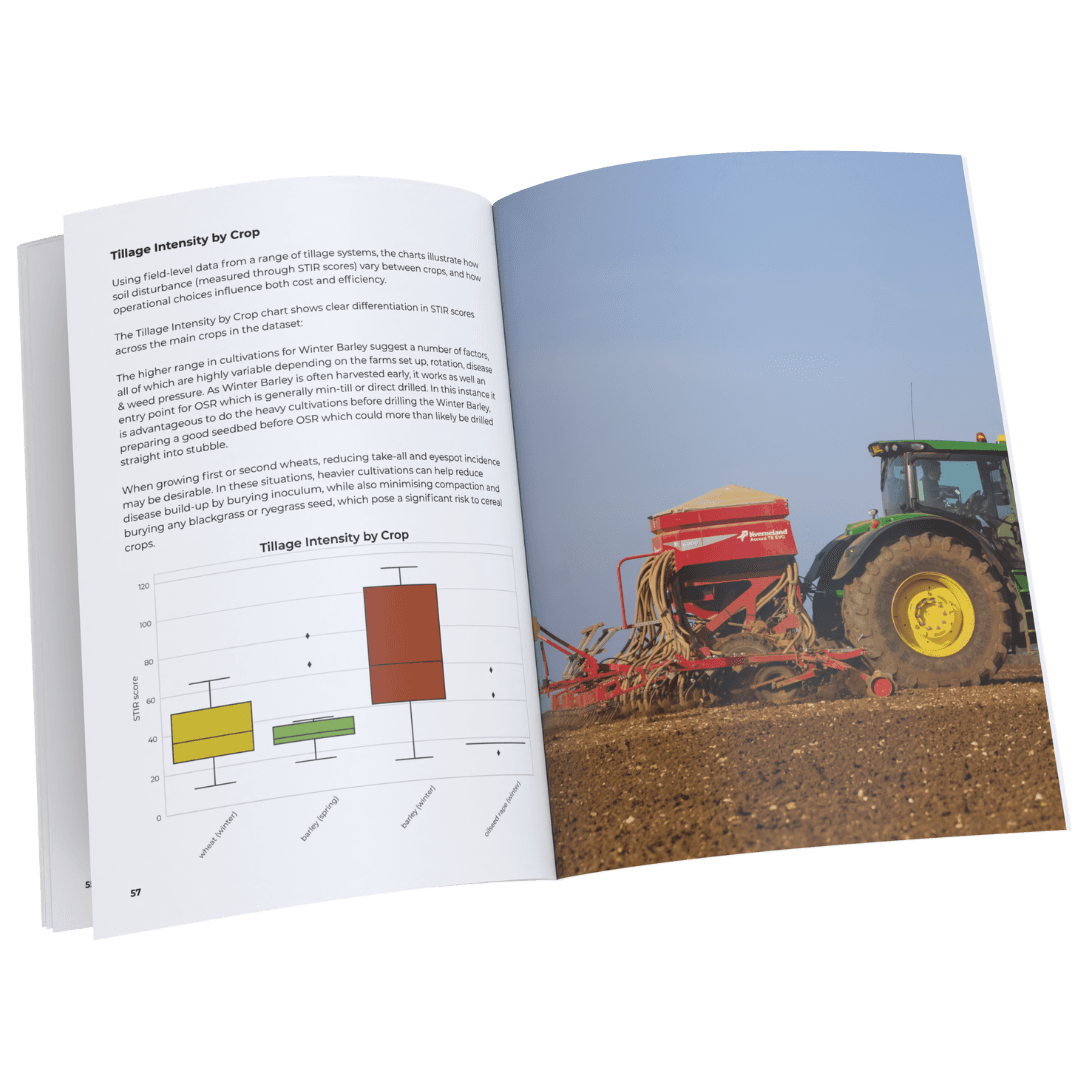
Tillage Intensity and System Impact
STIR scores by crop and operation type, to help you think about fuel use, machinery workload and establishment strategy as part of the whole-farm system.
How this Helps You Plan 2026 and Beyond
The past season is only useful if it improves the next one. The Arable Growers Guide is designed to help you:
Sense-check your own numbers. See how your cost per hectare and cost per tonne compare to anonymised medians across the country.
Build better budgets. Use the worked examples and sensitivity matrices to test realistic yield and price combinations for 2026.
Refine crop and variety choice. Understand which crops and varieties delivered the best balance of cost, yield and risk in a challenging year.
Review nitrogen and input strategies. See where other farms have reduced spend, where they’ve held firm, and what that’s meant for performance.
Have better conversations with advisers. Take concrete figures into discussions with your agronomist, business adviser or bank manager.
Where the data comes from
All analysis in the Arable Growers Guide is drawn from YAGRO’s extensive UK dataset of anonymised farm records.
Every data point is checked, standardised and validated before inclusion.
We only publish analysis where there is a statistically robust number of farms and fields, so you’re not comparing yourself against one or two outliers.
No individual farm is ever identifiable. Your data remains your data. We analyse benchmarks, not individual results.
This means you can rely on the Guide as a fair, representative picture of how UK arable businesses are performing, and where there may be room to move.