Winter Wheat Varieties: Yield, Cost and Popularity in 2025
Emily Padfield
Having looked at winter wheat as a whole, including how production costs have stabilised and where input spend has shifted, the next step is to understand how those trends play out at a varietal level. While headline averages provide a useful reference point, the YAGRO dataset shows that cost of production, yield performance, and overall efficiency can vary significantly between individual varieties. Exploring these differences helps to explain where investment has delivered returns, where costs have been harder to control, and how varietal choice influences both £/ha and £/t outcomes under the same seasonal pressures.
Varietal Cost and Yield Performance
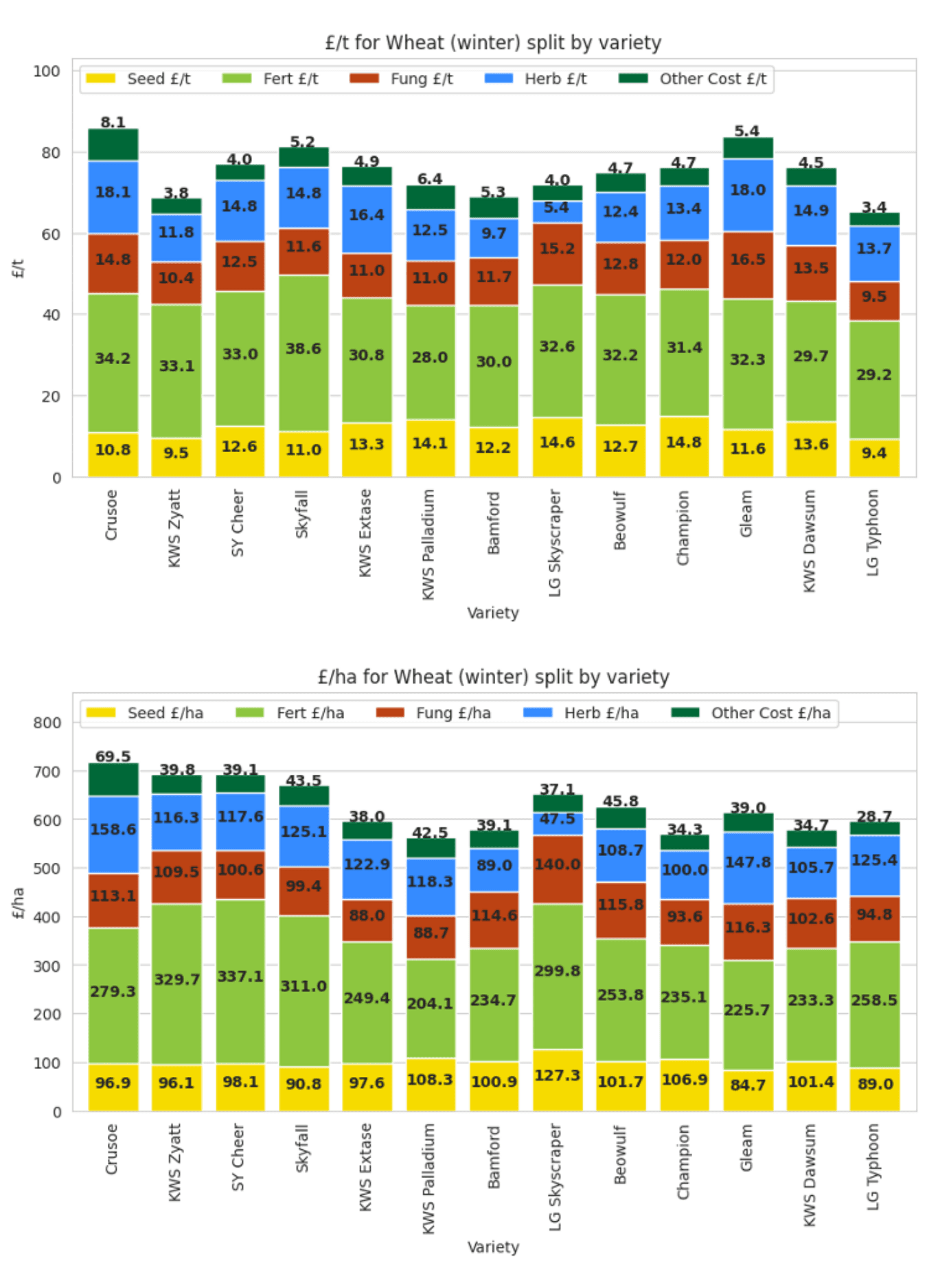
Crusoe sits among the most expensive milling wheats to produce when yield and variable input costs are considered averaging £717/ha. This reflects growers targeting protein over yield, combined with higher fungicide spend due to susceptibility to yellow and brown rust.
KWS Zyatt, known for its baking performance and yield potential, also presents challenges with yellow rust. Despite this, growers recorded the second highest amount on inputs for this variety in 2025 at £691.49/ha. Achieving the highest average varietal yield in the dataset for 2025 of 10.04t/ha suggests that this investment delivered returns in a challenging season.
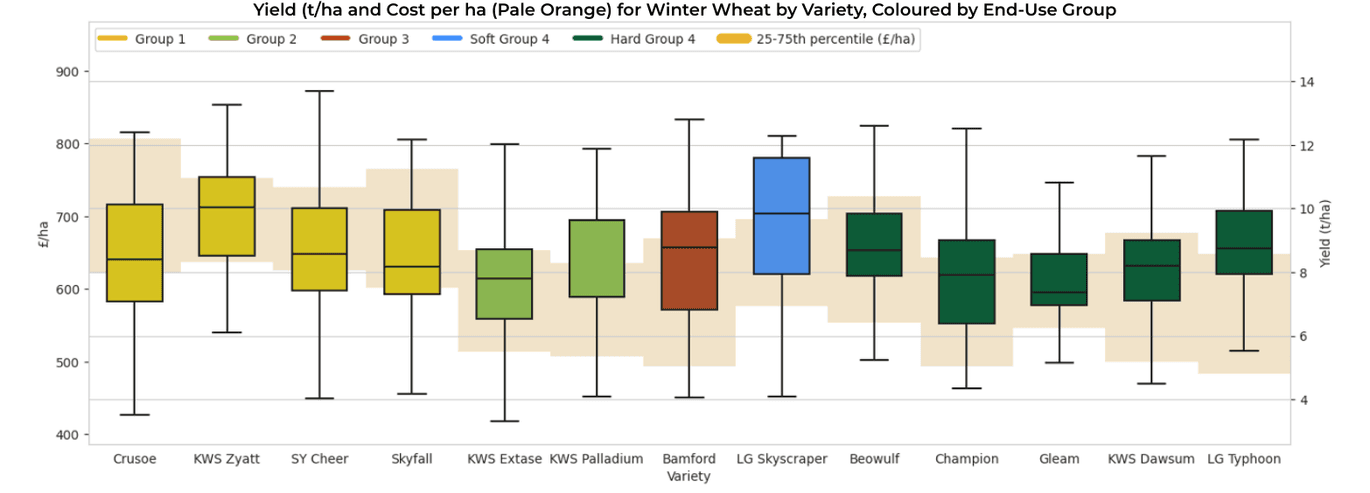
KWS Zyatt yielded 39% higher than KWS Palladium (Group 2) with an annual average of 7.21t/ha which was closely followed by Gleam yielding 7.39/ha on average.
Coupled with low input spend (£561.93/ha) compared to other varieties, especially in fertiliser (£204.15/ha) and fungicide (£88.72/ha) KWS Palladium achieved a commendable average cost of production at £72.05/t. This was not, however, the lowest recorded for Winter Wheat varieties; LG Typhoon recorded the lowest at £65.17/t demonstrating a successful balance between input spend and yield performance, maintaining a competitive £/t cost base.
To round out this series, our final article looks at how nitrogen strategies are evolving in winter wheat and what that means for planning and cost efficiency.

Emily is our Agronomy Data Specialist with over 10 years experience working with agronomic data. Having studied Environmental Biology at Nottingham Trent University, Emily is both BASIS and FACTS qualified with experience in arable and horticultural trials as well as agronomy, where she specialised in crop protection, quality analysis and integrated pest management. Emily is passionate about empowering farmers and supporting an industry she loves through accurate data interpretation, and takes pride in understanding and supporting the needs of modern farmers. In her words: “Having an analytics platform allows data to be translated into value through accurate decision making."