The Hidden Cost of Your Kit.
Ross Dawson
Here’s a chart every arable farmer should take a good look at:
Wheat price vs machinery cost 1860–present
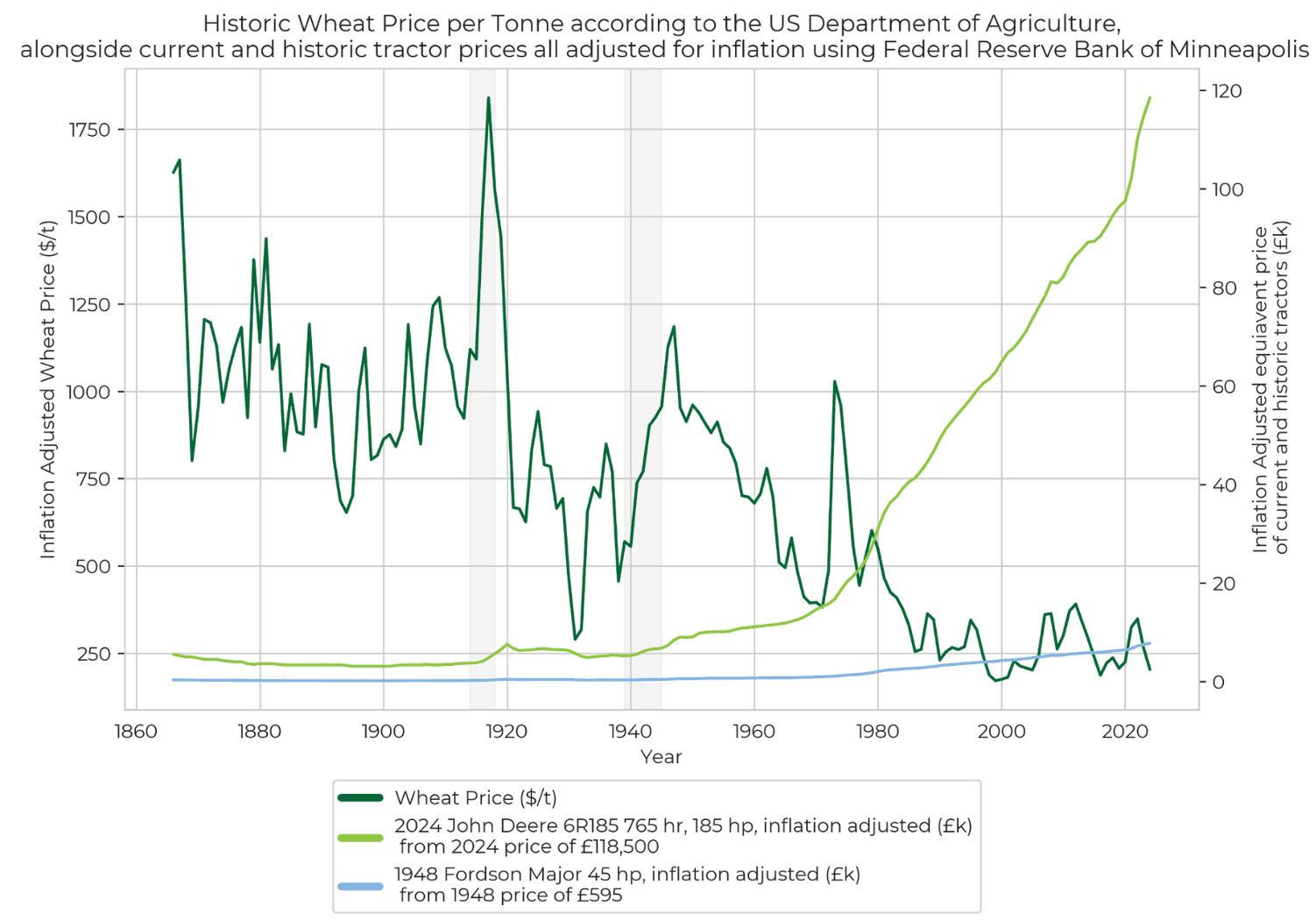
While the blue line shows real wheat prices falling sharply over time, the other lines - adjusted machinery costs - are going the other way fast.
In 1948, a Fordson Major tractor cost £595. That’s only a few thousand pounds in today’s money.
Today, a John Deere 6R185, with 185hp and plenty of modern bells and whistles, costs around £118,500.
That’s an astonishing rise. And it means that many farms today have far more capital tied up in kit than previous generations ever dreamed of.
What’s Driving Machinery Costs Up?
Modern farm kit is impressive - no doubt about it. But there’s a price for that progress:
Technology: GPS guidance, precision applications, complex hydraulics, digital displays and control systems - these all improve efficiency but add serious cost.
Regulation: Safety standards and emissions controls have added layers of compliance to manufacturing.
Rising input costs: The cost of steel, electronics, and skilled labour has risen globally.
The Problem: You’re Investing More for Less Return
The chart makes it plain: farmers today are investing far more capital in machinery while the real value of what that machinery produces is declining.
And it’s not just the purchase price. You’ve got to factor in maintenance, depreciation, insurance, fuel, and repairs - all of which bite into margins.
If you’re not tracking those numbers carefully, it’s very easy for machinery costs to quietly erode profitability year after year.
What Can You Do?
Rising machinery costs can feel like an unavoidable burden, but it isn’t all bad news. While you can’t change the sticker price of a new tractor, you can take back control by really knowing your costs and weighing up every investment. By understanding how each piece of kit performs against your margins, you open up opportunities to make smarter choices. The more visibility you have on the true cost of your machinery, the more room you have to protect profitability.
Know your machinery costs per hectare and per tonne. Are you really getting value from every £ invested? [Could plug YAGRO Operations]
Be open-minded about kit decisions. Second-hand purchases, leasing, and stretching kit life can be the right call for many businesses.
Use data. YAGRO’s tools make it simple to see exactly how your machinery costs stack up against margins - helping you make smarter decisions.
But machinery is only one part of the squeeze. The next chart in this series shows why the “grow more to stay profitable” model is running out of road.
Read the next post: Fight Back with Better Numbers

Ross grew up on his family's arable farm near Bury St Edmunds, where he currently lives with his wife and son. Ross has been involved in agriculture his whole career, starting off in seed sales, where he gained his BASIS Seed Sellers qualification, before moving into purchasing arable Inputs, including fertiliser & crop protection products, then into grain and crop storage before joining YAGRO. In his words: "I pride myself on my ability to communicate, engage and cultivate relationships with customers to best support, develop, and grow their businesses. I have always had a fascination with technology and believe that organised, validated, ‘real world’ data will be pivotal for enhancing decision making on farms as we move through the next phases of UK agriculture."