Working Harder for Less on Your Farm?
Ross Dawson
Ever feel like you’re working harder just to stand still?
Take a look at chart 1: The Real Price of Wheat 1860-Present
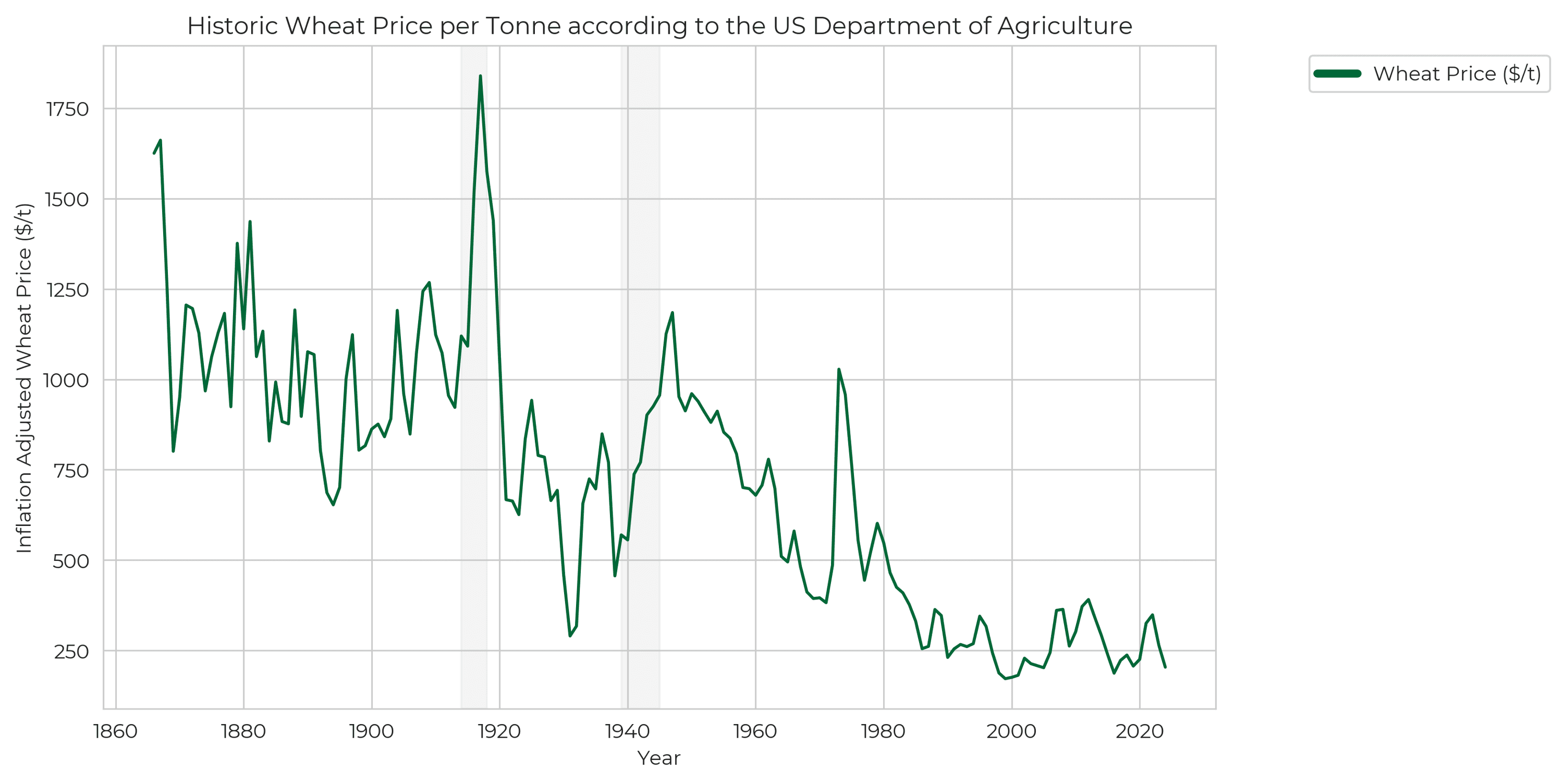
It shows the inflation-adjusted value of wheat over time. In today’s money, a tonne of wheat used to fetch over $1,000. (We're using $ USD rather than £ GBP as the historic data is more accurate).
Fast forward to the present, and that figure has fallen sharply - especially since the 1980s. The value of wheat in real terms is now just a fraction of what it once was.
So, what does that mean at the farm gate? Simply this: today’s farmers are having to put more money and more effort into producing crops that earn less than they did for their parents and grandparent’s generation. The cost-price squeeze isn’t an abstract economic theory - it’s here, and it’s real.
And over the next few articles, we’ll present data to paint the full picture.
Why Is This Happening?
There are a few reasons behind the trend you can see on that chart:
Global supply has grown. Wheat yields worldwide have improved through better varieties and farm management. More wheat on the market keeps prices lower.
Markets have opened up. Cheaper wheat from around the world is now part of the same global system UK farmers must compete in.
Subsidies and protection have declined. UK and EU policy changes mean home-grown wheat competes on price far more directly than it used to.
No more big yield breakthroughs. The era of yield growth outpacing market forces is over. That means farmers can’t just rely on growing more to maintain income.
What It Means for Your Business
But while the numbers and trends can feel discouraging, it isn’t all bad news. Farmers aren’t powerless in the face of global markets. What you can control is your own business insight: knowing your true costs of production, understanding your sales, and digging into the detail of where your money is going. Even if the wheat price is fixed by forces outside your gate, there are opportunities within your business to find efficiencies, unlock optimisation, and protect your margins. Clarity on the numbers is the first step to turning challenge into strategy.
Many farms have made excellent gains, as we’ll discuss later - the buying power of every tonne of wheat has shrunk.
And the chart we just looked at only tells part of the story. In the next post, we’ll show you how your biggest machinery costs are also making this squeeze even tighter, and why the data says you’re working harder and risking more for less.
Read the next post in this series: The Hidden Cost of Your Kit

Ross grew up on his family's arable farm near Bury St Edmunds, where he currently lives with his wife and son. Ross has been involved in agriculture his whole career, starting off in seed sales, where he gained his BASIS Seed Sellers qualification, before moving into purchasing arable Inputs, including fertiliser & crop protection products, then into grain and crop storage before joining YAGRO. In his words: "I pride myself on my ability to communicate, engage and cultivate relationships with customers to best support, develop, and grow their businesses. I have always had a fascination with technology and believe that organised, validated, ‘real world’ data will be pivotal for enhancing decision making on farms as we move through the next phases of UK agriculture."