Data Rich. Insight Poor.
Data is everywhere across modern agriculture, but insight is still surprisingly hard to find. Discover why disconnected systems, inconsistent formats, and manual processes leave organisations data-rich but insight-poor, and what it takes to turn complexity into clarity.
Supply chains have never had more data.
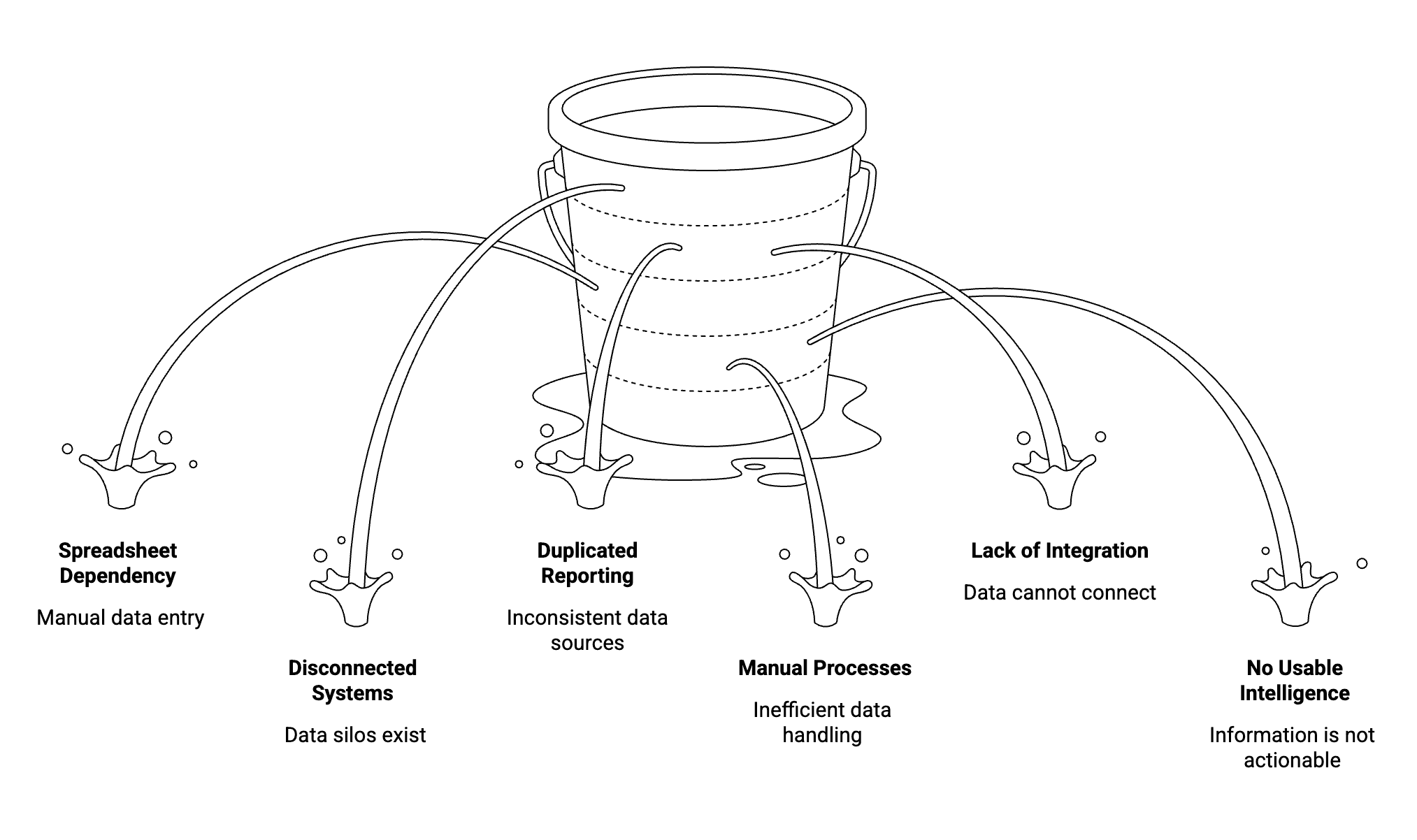
Across agriculture and food production, businesses are drowning in spreadsheets, disconnected systems, duplicated reporting, and manual processes.
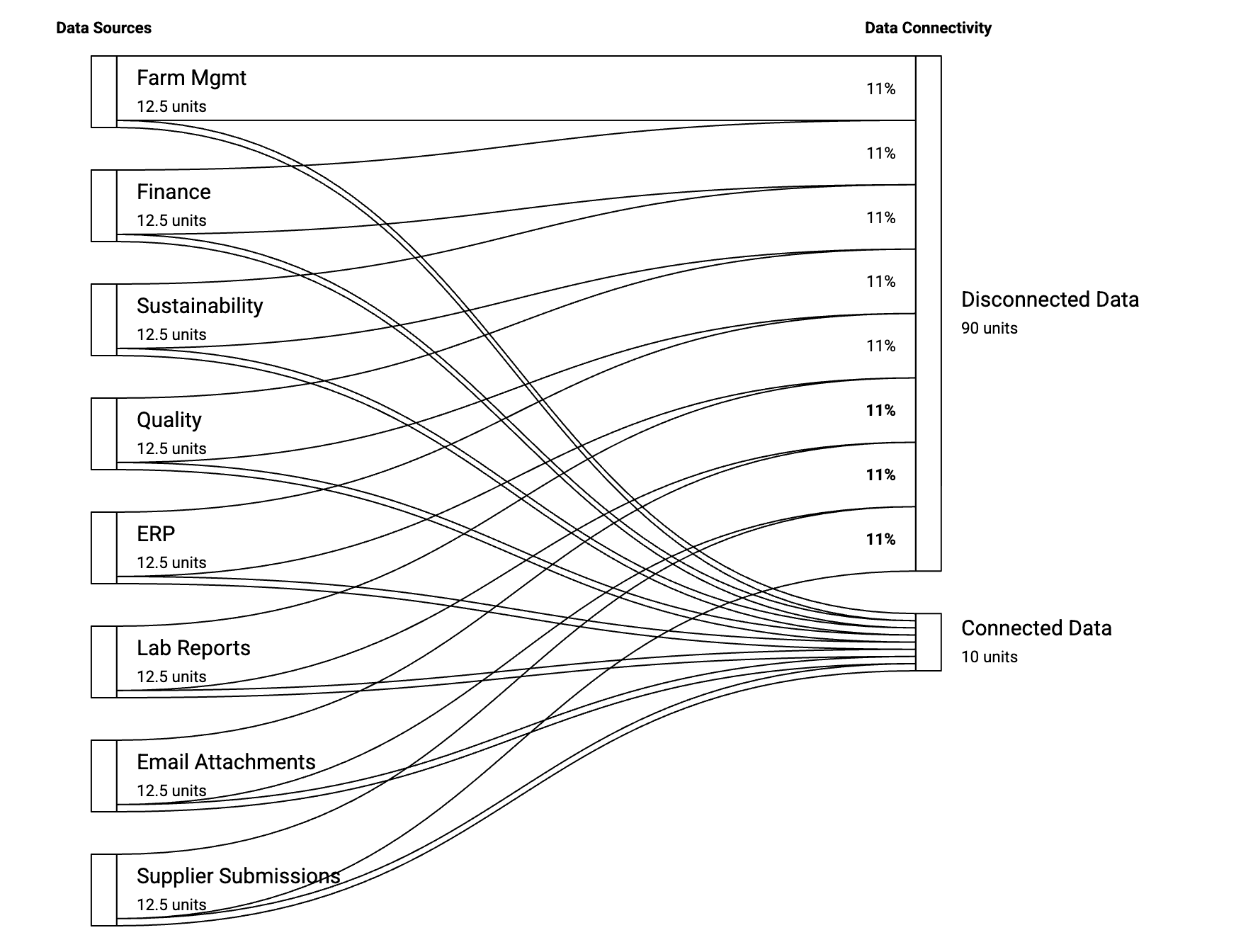
Data exists everywhere:
Farm management platforms
Finance systems
Sustainability tools
Quality systems
ERP platforms
Lab reports
Email attachments
Supplier submissions
But very little of it connects. The result isn’t a lack of information. It’s a lack of usable intelligence.
Teams spend weeks chasing, cleaning, restructuring, and validating data before analysis can even begin. By the time insight arrives, the opportunity to act has often passed. This is now one of the defining operational problems across the agricultural supply chain. And it is exactly why platforms like YAGRO Exchange and YAGRO IQ are becoming increasingly important.
Because the issue is no longer collecting data. It’s creating clarity from it.
A supply chain built on data, but not designed for it
From farms through to retailers, the modern food supply chain is made up of highly specialised, interconnected businesses.
Farmers generate operational and agronomic data. Advisors layer on recommendations and observations. Traders, processors, manufacturers, and retailers add commercial, quality, sustainability, and compliance data on top.
Every part of the chain is producing valuable information. Almost none of it is designed to work together. Instead, data becomes fragmented across:
Farm management systems
Finance and ERP platforms
Sustainability tools
Lab and quality systems
Emails and attachments
Shared spreadsheets
Individually, those datasets are useful. Collectively, they should be powerful. But in practice, organisations still struggle to create a connected view of performance, efficiency, cost, sustainability, and risk.
When spreadsheets become infrastructure
In the absence of connected systems, most organisations default to the same solution: Excel. (Sometimes Power BI layered on top of Excel.)
Spreadsheets have quietly become the operational infrastructure of the supply chain; filling the gaps between systems that were never designed to communicate with one another.
At first, this works. But over time, the cracks appear.
Data arrives in inconsistent formats. Files are duplicated across versions. Teams manually rework submissions. Critical processes become dependent on a small number of individuals who understand how everything fits together.
What started as a workaround becomes a dependency. And with that comes fragility. Creating not just operational risk. But organisational risk. Because the process no longer belongs to the business. It belongs to the spreadsheet.
The hidden cost isn’t software. It’s time.
The biggest issue with fragmented data processes is not necessarily inaccuracy. It’s delay. Large amounts of time are spent:
Chasing submissions
Cleaning datasets
Reformatting files
Reconciling inconsistencies
Consolidating information from multiple systems
Only once that work is complete can analysis begin. By that point, insight has already become retrospective. Teams are explaining what happened instead of influencing what happens next. In fast moving commercial environments, that lag becomes incredibly expensive.
The trust problem
Even when analysis is completed, another issue quickly appears: Confidence.
When data is manually gathered, inconsistently captured, or disconnected across systems, trust starts to erode. Teams begin asking:
Is the data complete?
Was it interpreted correctly?
Are we comparing like for like?
Can we actually rely on this?
That uncertainty has a direct commercial impact.
Businesses know the questions they need to answer:
Where are we performing well?
What is driving margin and inefficiency?
How do we benchmark performance?
How do we respond to sustainability requirements?
Where should we act first?
But without trusted data, those decisions slow down. Organisations fall back on instinct rather than intelligence.
More data is not the answer
Agriculture and food businesses are already data rich.
The problem is that most data is still:
Disconnected
Inconsistently captured
Manually consolidated
Difficult to validate
Hard to trust
The challenge is no longer access to information. It is structure. Until data is connected, validated, and standardised, it cannot deliver the clarity organisations are looking for.
From disconnected data to connected intelligence
This is the problem YAGRO has increasingly been built to solve.
YAGRO Exchange structures and validates supply chain data at the point of collection, replacing fragmented spreadsheet workflows with controlled, real time data submission.
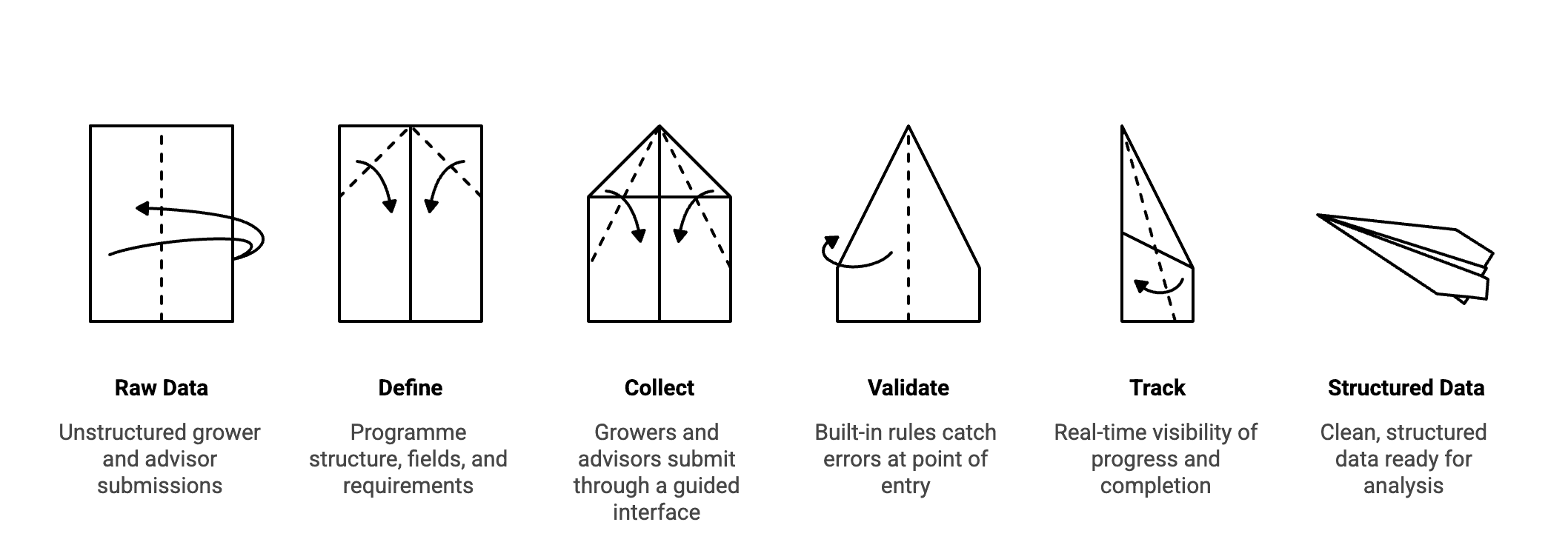
YAGRO IQ transforms that structured data into governed intelligence; comparable, trusted, and immediately usable across programmes, businesses, and supply chains.
Not more dashboards. Not more spreadsheets.
A connected intelligence layer designed for modern agriculture.
Because improving reporting alone will not solve the problem. The shift has to happen earlier. It starts with how data is collected, structured, validated, and connected before analysis even begins. That is where clarity is created.
Next: fixing the problem at the source
What happens when organisations stop treating data collection as an administrative task?
What changes when data is validated at the point of entry, structured consistently, and visible in real time?
In the next article, we’ll explore why forward thinking organisations are rethinking data collection itself, and how fixing the problem upstream changes everything.