The Future of Farm Data Is Connected
Why APIs and Continuous Farm Data Are Changing Agriculture
At Cereals this year, one topic seemed to appear in almost every conversation.
It wasn’t carbon, it wasn’t AI or even sustainability.
It was APIs.
Farmers, agronomists, processors, assurance schemes, software providers and food businesses were all asking the same fundamental question (or jumping to the answer):
"How do we connect data between systems without creating more administration?"
The answer APIs.
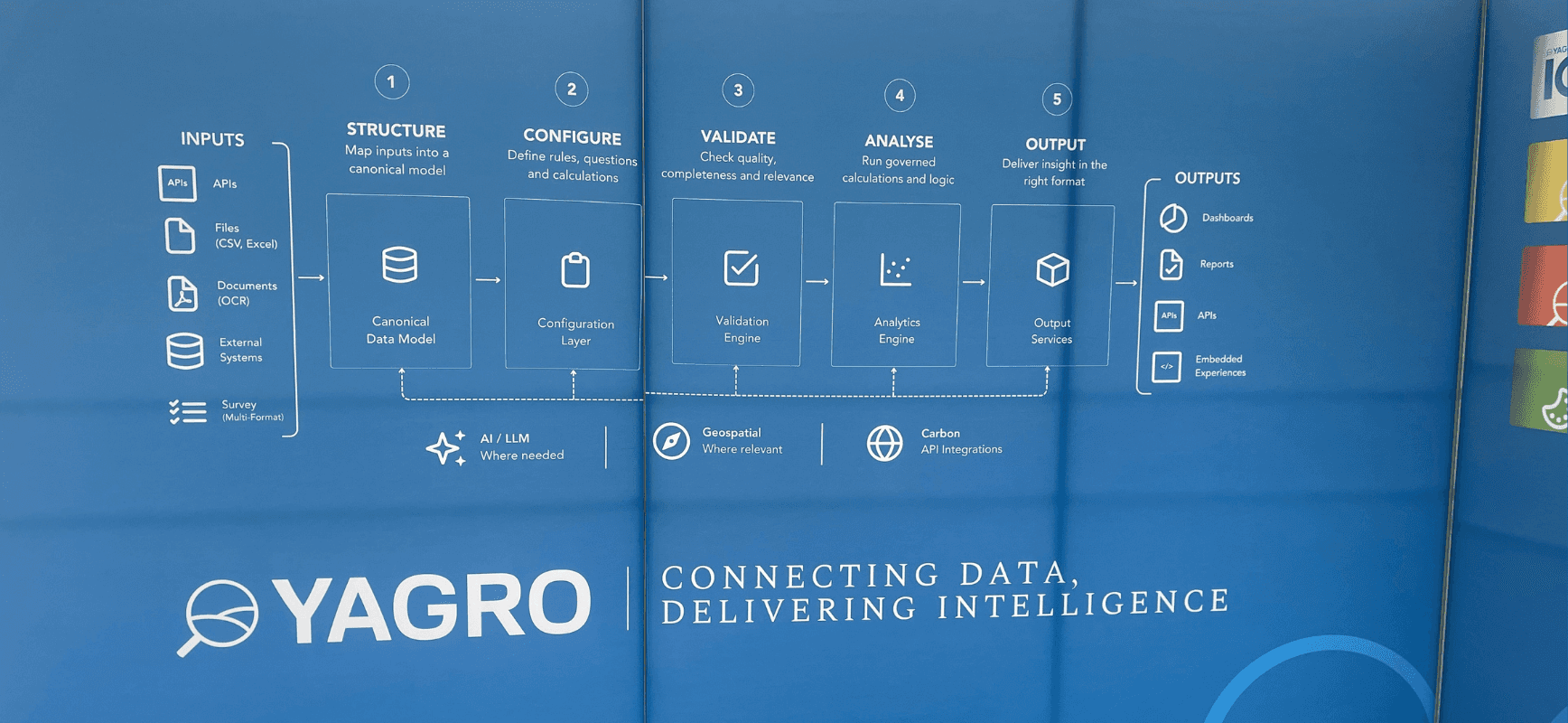
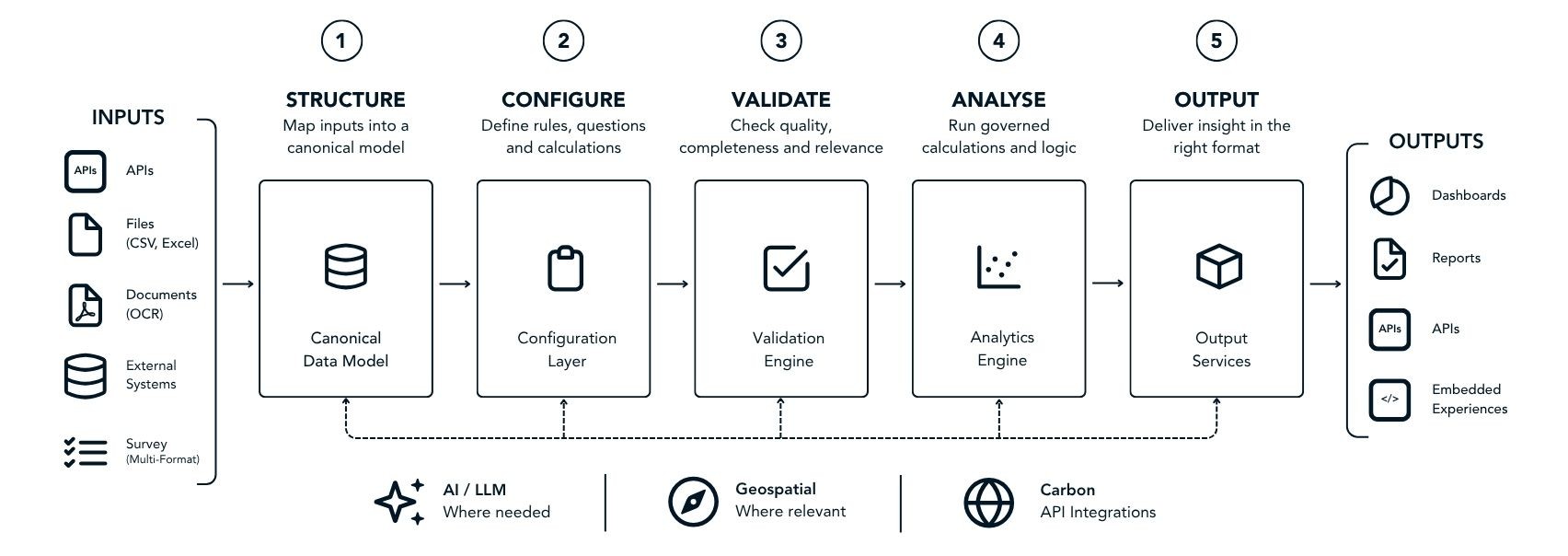
We saw first-hand how much interest there is in data connectivity. One of the most talked-about visuals on our stand wasn’t a dashboard or a report. It was a simple diagram showing how data moves through connected systems; from collection and validation through to analysis and decision-making.
The reason it resonated is simple, agriculture has spent years collecting more data.
Now the challenge is making that data move.
Data Has Exploded. Clarity Hasn’t.
Right across the agricultural supply chain, data is being generated.
Farm management systems, machinery platforms, carbon calculators, assurance schemes, financial systems, input suppliers, satellite imagery, sensors, spreadsheets…
The problem isn’t a lack of data.
The problem is that most of it remains trapped inside disconnected systems.
Every disconnected dataset creates friction. Every manual export creates risk. Every spreadsheet transfer introduces delay.
When systems don’t communicate, people become the integration layer; downloading files, re-entering information, checking figures and trying to maintain consistency across multiple platforms. It isn’t just inefficient.
It creates risk.
Every spreadsheet export, email attachment and manual transfer introduces the possibility of errors, version conflicts, security breaches or data being shared beyond its intended audience.
As data becomes increasingly valuable across the agricultural supply chain, organisations need more than access to information. They need confidence that it is accurate, secure, permissioned and traceable.
The organisations creating the most value from data are the ones building better connections.
What Is An API?
API stands for Application Programming Interface.
In simple terms, an API is a way for two software systems to exchange information automatically.
Rather than downloading files, emailing spreadsheets, or manually entering data into multiple systems, APIs allow information to move directly between platforms in a secure and structured format.
For example:
A farm management system can share cropping information with an assurance scheme.
A machinery platform can provide operational data to an analytics platform.
A carbon calculator can receive validated emissions data automatically.
A processor can access sustainability information from hundreds of farms through a single connection.
The systems remain separate, but the data can flow between them.
How Do APIs Work?
Most APIs operate through requests and responses.
One system asks for information. The second system provides that information in an agreed format. Access isn’t open to everyone. APIs use secure authentication methods, (API keys, certificates or tokens) to verify who is requesting the data and what they are allowed to see.
Those requests can happen once, daily, weekly, in real time, or whenever new information becomes available. The process is automated, repeatable, and far more reliable than moving data manually.
Where Do APIs Come From?
APIs don’t appear automatically. Software providers have to build and maintain them.
Increasingly, modern platforms provide APIs because customers want their data to work across multiple systems rather than remain locked within a single product.
When organisations adopt open, well-structured APIs, data becomes portable. Information can move securely between platforms, reducing duplication, improving accuracy and creating entirely new opportunities for collaboration.
The more connected the agricultural supply chain becomes, the more valuable APIs become.
A Practical Example: Assurance
The value of APIs isn’t simply that they save time.
The real value is what becomes possible when trusted data can flow continuously between organisations.
One area where this could have a profound impact is assurance.
Assurance schemes, processors and food brands increasingly need confidence that standards are being met throughout the year, not simply on the day an audit takes place.
This is where connected data starts to become far more powerful than traditional reporting.
The Audit Problem
Assurance schemes provide enormous value.
They establish standards. They improve confidence. They create consistency across supply chains. But they are built around a fundamental limitation.
An audit tells you what was true on inspection day. It does not tell you what is happening today.
A certificate provides a snapshot.
The reality on farm is continuously changing. Cropping plans evolve, inputs are applied, practices change, harvests happen, weather impacts decisions, carbon footprints shift, risk profiles move.
The modern food chain increasingly requires more than annual snapshots. It requires ongoing evidence.
As regulatory expectations increase and supply chains seek greater transparency, the gap between periodic audits and continuous visibility becomes more significant.
The Missing Layer: Continuous Farm Data
Continuous farm data creates a new layer of assurance.
Rather than relying solely on what was true when an auditor visited, organisations gain visibility into what is happening throughout the season.
This isn’t about replacing audits. It’s about strengthening them. The evolution looks something like this.
Stage 1: Proven Today
Seasonal farm data; inputs, carbon, yield and farming practices, flows to processors and brands through structured, validated programmes such as Yagro Exchange.
The infrastructure exists. The data quality is trusted. The foundation is already being built.
Stage 2: Emerging Now
Assurance schemes gain continuous visibility across their member base, not just on audit day. Standards become living indicators rather than annual events.
Scheme membership becomes a meaningful, defensible claim supported by evidence throughout the year.
Stage 3: What’s Coming Next
As supply chain due diligence requirements increase, continuous farm data becomes the evidence layer behind compliance claims to regulators, investors and customers.
Assurance becomes something that can be demonstrated continuously, not simply verified periodically.
Why APIs Sit at the Centre of This Future
None of this works if data remains trapped. Continuous assurance requires continuous data flow. Continuous data flow requires connectivity. Connectivity requires APIs.
That’s why APIs dominated so many conversations at Cereals.
People increasingly recognise that the challenge isn’t collecting another dataset. It’s enabling trusted information to move securely between the people who need it. The connection out matters just as much as the collection in.
A farm may hold valuable information. But its value isn’t fully realised until it can flow securely, with permission, to the organisations making decisions across the wider supply chain.
Data sitting in a silo has limited value. Data that can move becomes intelligence.
From Data Collection to Data Movement
For years, agricultural technology focused on helping people collect data.
The next phase is about helping data move.
Move automatically. Move securely. Move in a structured format. Move without creating more work for farmers.
That was one of the strongest themes we took away from Cereals. The conversation is shifting from “How do we collect more data?” and towards a much more important question:
“How do we make trusted data flow?”
In a world where data has exploded, the organisations that create the most value won’t be those that simply collect the most information. They’ll be the ones willing and able to work together.
The future of agricultural data isn’t built on isolated systems or proprietary silos. It’s built on trusted connections between farmers, supply chains, technology providers, assurance schemes and industry partners.
People create collaboration. APIs simply provide us with infrastructure that makes collaboration possible at scale.